


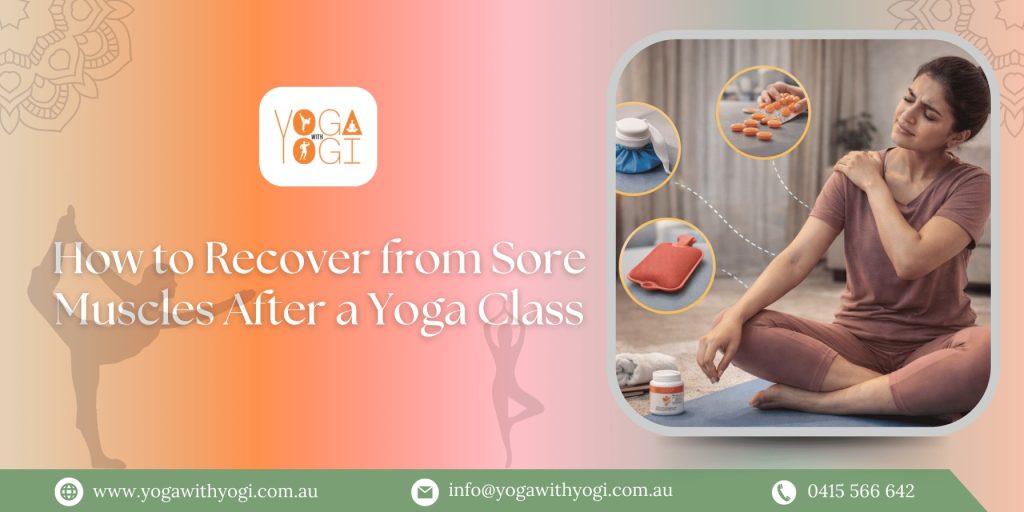
Let’s be honest—while yoga is meant to relax and stretch you, it can sometimes leave you surprisingly sore the next day, especially if you’re new or trying a different style. If you’ve just joined one of the best yoga classes in Sydney, or even started private yoga lessons at home, you might be wondering why your hamstrings feel like they’ve been through a bootcamp!
The good news? A bit of soreness means you’ve worked muscles that needed love—and with the right recovery plan, you’ll bounce back even better for your next session.
Here’s your local Aussie guide on how to soothe sore muscles after yoga and make the most of your practice.
1. Why Am I Sore After Yoga?
It might surprise you, but even gentle yoga styles can leave you feeling it the next day. That’s thanks to something called DOMS – Delayed Onset Muscle Soreness. It usually shows up 12–48 hours after exercise and is completely normal.
So why does yoga cause it?
- You’re using muscles in new ways (e.g. deep stretches or isometric holds)
- You may have held poses longer than usual
- It could be your first session after a break
- Or you’re working on building new flexibility and strength
Don’t worry—it happens to even the most seasoned yogis, especially after a dynamic Vinyasa or power yoga class.
2. Hydration & Nutrition: Start from the Inside
If you’re attending regular yoga classes in Sydney, you’re likely sweating—sometimes more than you realise. Dehydration can make soreness feel worse.
Hydration tips for faster recovery:
- Drink plenty of water post-class
- Add electrolytes or sip on coconut water
- Avoid dehydrating drinks like too much coffee or alcohol
And don’t forget nutrition:
- Load up on anti-inflammatory foods: berries, turmeric, leafy greens
- Include protein for muscle repair (tofu, eggs, beans, lean meats)
- Magnesium-rich foods (like almonds, bananas) help muscle function
💡 Did you know? Around 35% of Australians are estimated to be low in magnesium—so topping up can really help.
3. Gentle Movement the Next Day
Rest doesn’t mean lying on the couch all day. Gentle movement helps increase blood flow and speeds up recovery.
What you can do:
- Take a light walk around your neighbourhood
- Try a restorative or Yin yoga session
- Do active stretching at home
Even five minutes of movement can release tension and flush out lactic acid. At Yoga with Yogi, we often recommend a light stretch flow the day after an intense class or private yoga lesson.
4. Heat, Cold, and Self-Massage
Using heat and cold can ease that deep muscle soreness.
Heat:
- Warm baths or showers (add Epsom salts for extra relief)
- Heat packs on specific tight areas like lower back or hamstrings
Cold:
- Ice packs if there’s swelling or acute soreness
- Great for joints after longer sessions or outdoor yoga
Massage:
- Foam rolling to release muscle knots
- Use massage balls (like a spikey foot ball or tennis ball)
- Treat yourself to a remedial massage—many studios in Sydney offer them alongside yoga
5. Sleep Like a Baby
Sleep is when your body repairs itself—so it’s essential for muscle recovery.
🛌 Tips for better post-yoga sleep:
- Do a calming stretch or yoga nidra session before bed
- Avoid screens and heavy meals at least an hour before sleep
- Use a lavender oil diffuser or herbal tea to wind down
Australian research shows that 7–9 hours of quality sleep can improve muscle recovery by up to 60%.
6. Try These Post-Yoga Recovery Tools
For yogis serious about staying consistent, these tools make recovery easier:
🧘♀️ Yoga props: Blocks, bolsters, straps to support the body
💧 Magnesium oil or spray: Rub it on sore areas before bed
🧦 Compression socks or leggings: Great after long classes or pregnancy yoga
🎧 Guided meditation apps: Like Smiling Mind (Aussie-made!) or Insight Timer
7. Avoiding Soreness Next Time
There are a few simple ways to prevent post-yoga soreness from getting too intense:
✅ Warm-up properly – never skip this part of class
✅ Cool down – spend time in child’s pose or legs-up-the-wall
✅ Start slow – especially if you’re new or returning after a break
✅ Communicate with your teacher – tell them if you have tight areas or old injuries
✅ Modify poses – there’s no need to go full expression every time!
If you’re doing private yoga lessons, your teacher can build a recovery plan into your sessions—tailored to your body and goals.
8. When to See a Physio or GP
Most soreness is harmless, but keep an eye out for:
🚨 Sharp, stabbing pain
🚨 Swelling that doesn’t go away
🚨 Pain that worsens over a few days
🚨 Numbness or tingling
In these cases, it’s best to speak to a physiotherapist or your local GP—especially if you’re combining yoga with other workouts or are pregnant.
Final Thoughts: Listen to Your Body & Keep Moving
Muscle soreness after yoga is completely normal—especially if you’ve just started with one of the best yoga classes in Sydney or joined a new routine. It simply means your body is getting stronger, more flexible, and adapting.
The key is balance: move a little, rest a little, stretch a lot, and stay hydrated.
At Yoga with Yogi, we believe that recovery is just as important as your yoga practice itself. Whether you’re attending group classes or private yoga lessons, we’ll guide you every step of the way—with safety, care, and a bit of fun too.
🧘 Ready to Start or Restart Your Practice?
If you’re looking for gentle, supportive, and expertly guided yoga in Sydney, we’re here for you.
✅ Beginner to advanced classes✅ Prenatal and private yoga lessons available✅ Recovery-focused sessions tailored to your needs
👉 Book a class with Yoga with Yogi and feel better—on and off the mat.
