



Starting yoga at home is the easy bit. Keeping it going is where most of us struggle. A big deadline, a sick kid or a tired Wednesday night can knock a new habit off track fast.
The good news is that you don’t need a free hour or a picture-perfect lounge room. With online yoga classes, you practise when it suits you, with no studio trip needed.
In 2026, plenty of Australians juggle remote work, long commutes and family life. A small, steady practice can help your body and your head. Here’s how to make it stick.
1. Set a Realistic Yoga Schedule
Consistency starts with a routine that you can maintain. Rather than resolving to spend an hour every day practising yoga, begin with 10-15 minutes a few times each week.
Find a time that suits your lifestyle
- Morning: gentle stretches
- Lunch break: desk tension relief
- Evening: slow, calming poses
Put it in your calendar like any other appointment. Set a reminder if you need one.
Missed a session? It happens. Just pick it up at the next one.
2. Choose Online Yoga Classes That Match Your Needs
Not every class suits every day. Some days you want a gentle stretch; other days you want to work up a sweat.
New to yoga? Go for beginner classes that explain each pose slowly. More experienced? Try sessions that build balance, strength or breathing control.
Look for:
- Short and long options
- Clear instructions
- Easy modifications
- Qualified teachers
- Gentle, strong and restful styles
A 15-minute class for shoulders, back and hips will probably help more than a tough full-body one.
Pick online yoga classes you actually enjoy. A routine you like beats an ambitious one you dread.
3. Create a Dedicated Space at Home
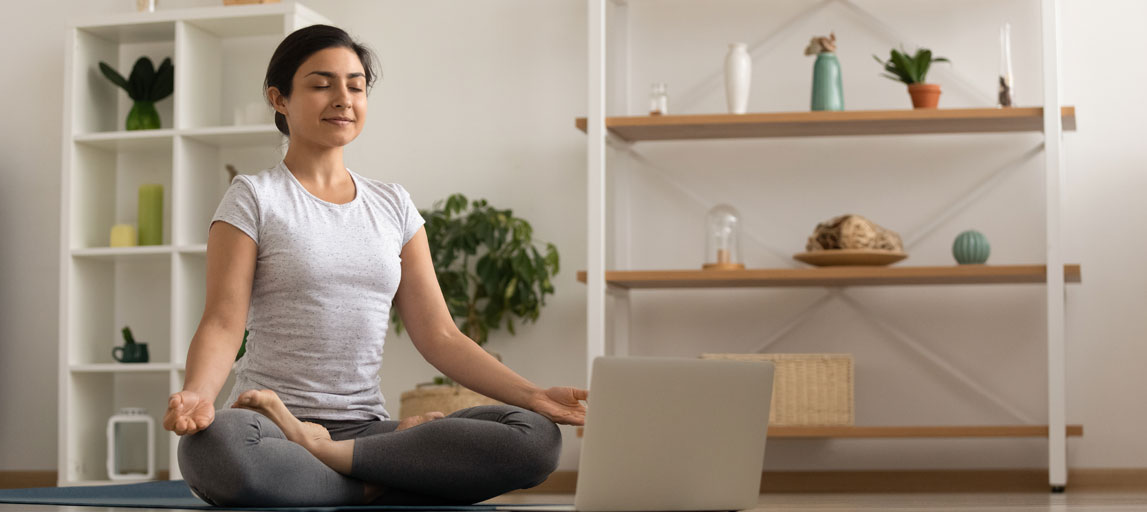
You don’t need a separate room. A quiet corner where you can stretch your arms and legs is plenty.
Keep your mat somewhere easy to grab. If you have to shift the couch and hunt for your gear first, you’ll find reasons to skip.
Make your space comfortable
- Mat, blocks, and strap together
- Enough room to move
- Stable device stand
- Silenced notifications
- Comfortable light temperature
Many Aussie homes have a good spot already, like a spare bedroom, the living room or a shady patio. Outdoors, choose a flat, non-slip surface and avoid the midday heat.
It doesn’t need to look good. It just needs to make starting easy.
4. How to Stay Motivated with an Online Workout
Motivation comes and goes, so don’t rely on it. Build small habits that carry you through busy weeks.
A good trick is pairing yoga with something you already do. Roll out the mat after your morning coffee, or practise for 10 minutes after closing your work laptop.
That’s the core of how to stay motivated with online workout routines: keep it small and make it automatic. A few more ideas:
- Small goals: three sessions weekly
- Weekly plan: choose classes ahead
- Five-minute rule: stop after five if needed
- Celebrate effort: short sessions count
Here’s the secret. Motivation often shows up after you start, not before.
5. Build Mindfulness into a Busy Day
Yoga isn’t only movement. It’s also a chance to slow down and notice how you feel.
For busy people, even a couple of quiet minutes between meetings can reset the day. These mindfulness practices for busy professionals need no gear:
- Conscious breathing: two quiet minutes
- Body check: drop shoulders, unclench jaw
- Mindful transitions: three breaths after work
- Quiet sitting: five minutes, phone away
They pair well with your regular classes.
6. Track Your Yoga Progress Without Pressure
Simple yoga progress tracking helps you spot small wins. Use a notebook or a basic app to record:
- Date and duration
- Type of yoga
- Poses that felt easier
- Energy before and after
- Any discomfort
Review your notes every four weeks. You may find you’re practising more often or bouncing back from work stress faster.
Set goals from your own starting point, not your instructor’s. Everyone’s body moves differently.
If a movement causes sharp pain, stop and get proper guidance. Never push through it.
7. Create a Flexible Home Yoga Routine
A good routine has enough structure to keep you going, but not so much that it feels like another chore.
Here’s a simple week for beginners:
| Day | Practice | Duration |
| Monday | Gentle full-body stretches | 15 minutes |
| Tuesday | Breathing and mindfulness | 5–10 minutes |
| Wednesday | Beginner strength and balance | 15–20 minutes |
| Thursday | Rest or light movement | Optional |
| Friday | Gentle back and hips | 15 minutes |
| Saturday | Longer class you enjoy | 20–30 minutes |
| Sunday | Rest and review progress | 5 minutes |
Tweak it to suit your energy and commitments. You don’t need to tick off every session.
These sat home yoga routine tips boil down to three things: keep sessions short, set up your space beforehand and choose moves that suit your body. Coming back after a break? Start gently and build up slowly.
8. Avoid Common Mistakes That Interrupt Your Practice
Even a good plan falls apart when expectations are too high. Watch for these:
- Too much, too soon: build up gradually
- Waiting for perfect time: short beats skipped
- Comparing yourself: bodies differ
- Skipping rest: recovery matters
- Same intensity daily: match your energy
The goal isn’t a flawless streak. It’s a routine you keep coming back to.
Have an injury, ongoing pain or a health condition? Talk to a healthcare professional first and pick classes with suitable modifications.
Frequently Asked Questions
1. How many online yoga classes do I need to attend?
Beginners can attend 2 or 3 classes each week, which last from 10 to 20 minutes.
2. How can I stay consistent with yoga at home?
Choose a regular time, leave your mat ready and set small goals. A short backup session for busy days also helps the habit survive.
3. Is an online yoga lesson fit for beginners?
Yes, during beginner classes of yoga, simple poses and breathing exercises are taught step by step. The right trainer must be selected who will teach you everything.
4. How can I track my progress during yoga exercise at home?
Track your progress by tracking how many times, how long and how you do your yoga poses and breathing exercises. This should be done periodically, not every day.
5. Do I require any equipment to do yoga online?
Not really. A decent mat and enough space to move are a good start. Blocks and straps help but are optional for many beginner sessions.
Conclusion
Being consistent with online yoga classes in 2026 doesn’t mean adding more hours to your busy schedule. It means integrating yoga into your already existing lifestyle. A realistic timetable, an inviting space, classes you like and some progress tracking will help you create a sustainable habit.
Begin with baby steps, stay adaptable and allow yourself enough time. Just a single class can add balance to your day.
Are you ready to start doing yoga regularly? Try out the online yoga classes available at Yoga With Yogi.
